
Contents
-
0.1 Highlights
- 0.1.1 Gully is an important fielding position in cricket, from where many runs are stolen and catches are also taken.
- 0.1.2 Earlier cricket fielding had no street location, where and how did it come from?
- 0.1.3 While fielding in cricket, when the fielder stands on the lane, that position is indicated by an arrow.
- 0.1.4 This is cricketer Arthur Jones, who named the fielding position gully. (Wiki Commons)
- 0.1.5 If we talk about the streets, the streets of Banaras are famous and the lanes of Old Delhi are also famous.
- 1 Share this:
- 2 Related
Highlights
Gully is an important fielding position in cricket, from where many runs are stolen and catches are also taken.
Earlier cricket fielding had no street location, where and how did it come from?
The streets of Banaras are famous all over the world, what about the streets of Old Delhi. Indeed, in all countries from Europe to the Gulf there was a great development of narrow roads or streets, with high-rise buildings built around a narrow road in the middle. Now the word gully is pronounced in only two places, one in India and the other in cricket. Are cricket position alleys named after streets in India?
It would be really interesting to know if there is any relation between cricket lane and India lane or not. When cricket was developing in the 17th century, it had no such condition as a lane. She joined it after several decades. By the way, in India, streets were built in old cities for hundreds of years. Some are still buzzing and some have become desolate with time.
City streets and Cricket Street
We Indians have created many notions and songs about the streets. Made up the names of the films. Dialogues were written. A lot has been said about streets in literature. The streets of Banaras are very famous. Some streets of this city are 150 and some more than 200 years old and are as they are. Now calling streets as lanes around the world is probably only limited to India. But the question remains, how did the name given to the fielding position in cricket come about?
How was the street named in cricket?
Because when you hear about fielding positions in cricket, it often raises questions as to how these names came to be. And by the names of these positions, we know any fielding position in cricket. Now like square, fine, back and front, wide and straight, deep and short. From this one can know which fielder is standing in front and back.
Cricket Street is complete in its place but…
Now if you think about it, where did the names slip, gully, midwicket, cover come from? They should have an interesting story. First let us talk about the street itself, which was so connected to the old residential areas of our country that it was connected till now. Earlier there were streets and out of them mahollas were formed. Now the new settlements no longer have streets but they are certainly intact in cricket.
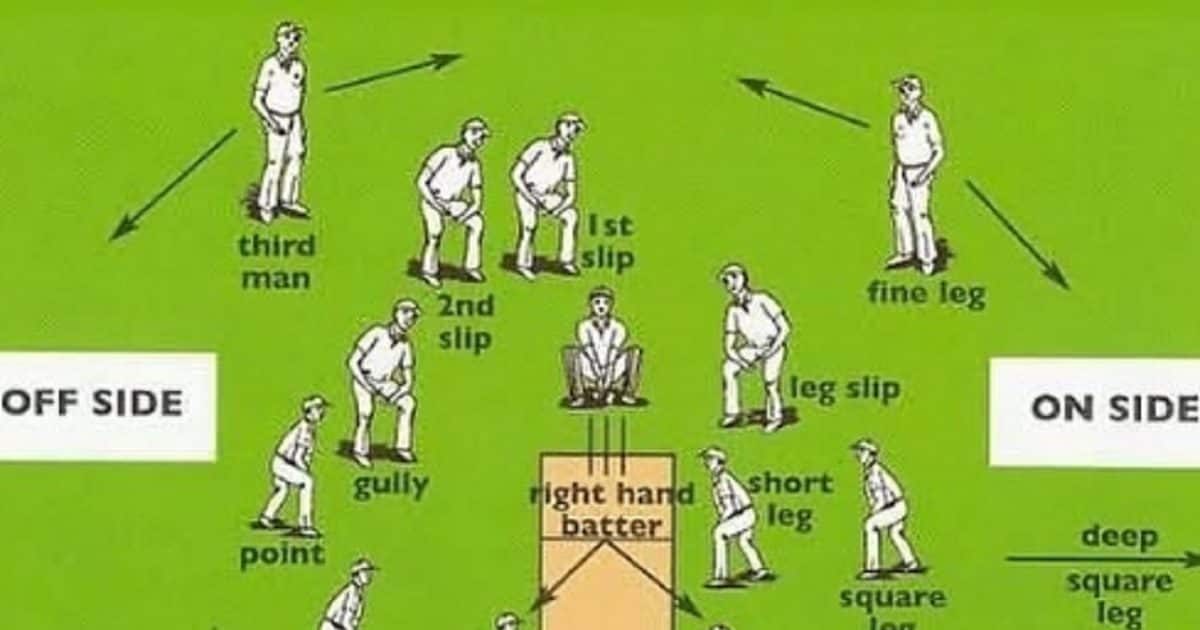
While fielding in cricket, when the fielder stands on the lane, that position is indicated by an arrow.
What does street mean?
By the way, when you write gully in English, it can have many meanings – street, gutter, drain, gully, waterway, ditch, coluse, lane, pit, narrow valley, ditch. Gully can also mean a long narrow valley with steep sides. That is, Gully means a narrow path or a narrow waterway, so how did this word come into cricket. Does this have anything to do with the streets of India?
What does that have to do with the streets?
The answer is that the street position in cricket fielding only has a connection with the streets of India, when its name came to mind, it came in the form of a thin and narrow road. We will also tell you which gentleman named the street in the cricket position and when.

This is cricketer Arthur Jones, who named the fielding position gully. (Wiki Commons)
Where is the lane in cricket?
The gully position in cricket is named after the narrow channel or narrow space between point and slip. The position of the lane is between slip and point next to the stumps on the cricket field. Often skilled batsmen steal many runs by placing the ball with their bat towards this spot. So, the lane is always very important, where a good fielder is needed.
By what name was the location of the street known earlier?
By the way, the gully position was formerly known as short third man. Then the third man’s position was originally between point and slip, but later the third man’s position was moved further back in the wicket, where the standing fielder has to run a lot. Generally, when we talk about gully, it is considered towards the off side, but when the position of gully is towards the leg side, it is called leg gully.
Who gave this name?
The gully position in cricket was invented in 1880 by Arthur Jones, who later became England captain. In a way, lane acts as a bridge between slip and point in cricket fielding. The first known use of the term is believed to be in 1657.

If we talk about the streets, the streets of Banaras are famous and the lanes of Old Delhi are also famous.
Streets of India
Well, the streets of two places are very famous in India, one is the streets of Old Delhi which has many names and the other is the street with the most parathas. Second, the narrow lanes of Banaras that look like a labyrinth. The streets of Banaras are famous all over the world. These streets are also called Labyrinth and Mysterious World. For example – Kachori Gali, Vishwanath Gali, Kalika Gali, Gola Dinanath Ki Gali.
However, most of the country’s old streets were built during the Mughal era. In most of the old cities, the streets built in ancient times were built and named at the same time, so it can be said that the concept of street was brought to this country by the Mughals before the British and must have become the word street. Popular during his time. If you look at old pictures of the streets of Lahore, you will still be amazed. Once upon a time, streets were the pride and fashion of cities. Although now the identity of an older culture.
If we look at it from this perspective, it seems that when Arthur Jones started naming streets in cricket fielding positions, the streets in India became populated and they started speaking as streets.
Jonty Rhodes had no answer on the street
Well, now let’s finish the discussion by talking about who is considered the best fielder of all time in cricket. In which the name of Gento Rhodes is still taken as the best fielder. who stopped runs with the ball and also took catches while diving in the air.
Both city streets and cricket streets are special
Both city streets and cricket lanes are special. One tells the story of the city’s rich characters and the other tells the story of a place where many runs, catches, falls and are caught. Both places are very lively.
,
Tags: Cricket, Cricket World Cup, Former fielding coach, street boy
First published: November 17, 2023, 15:50 IST